
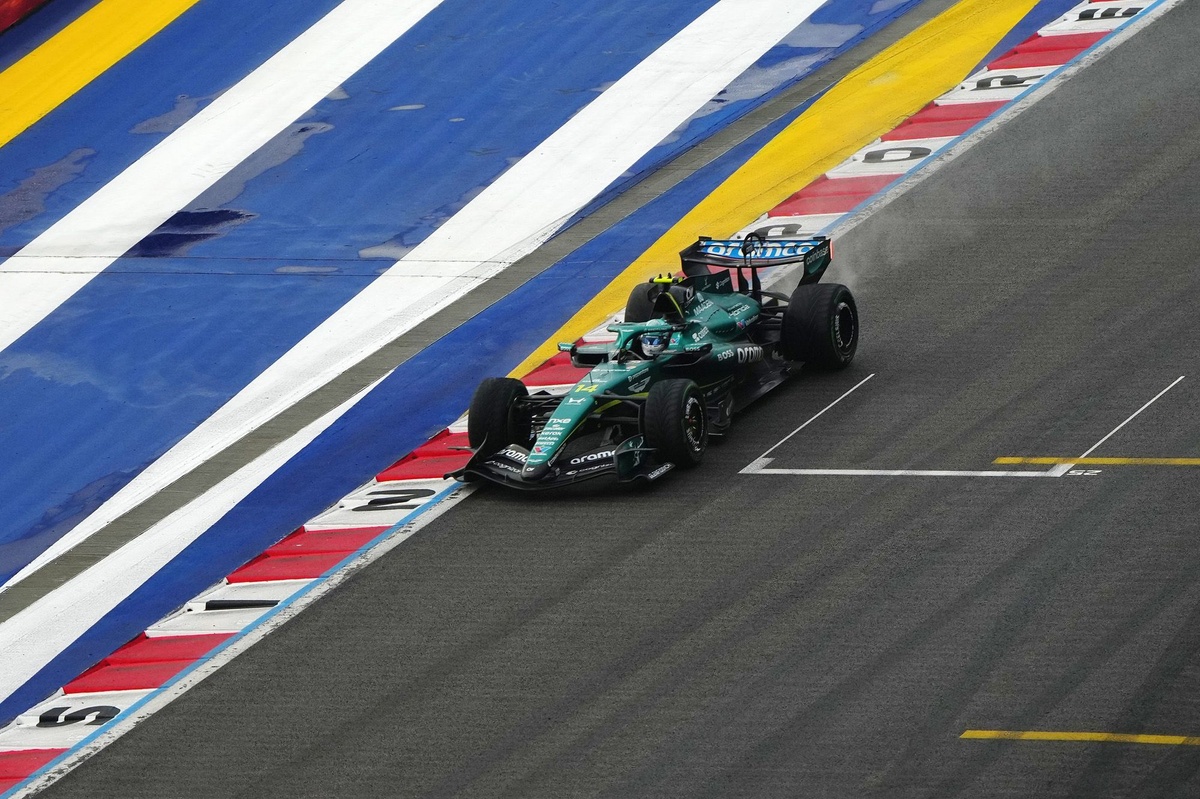
Following a surprisingly profitable System 1 weekend in Malaysia, expectations had been additionally excessive at Aston Martin for Singapore, a venue that ought to have suited the AMR26 on paper.
Nonetheless, the aggressive image on the Marina Bay Avenue Circuit proved reasonably disappointing, with Fernando Alonso pointing to issues with the Honda energy unit after the race, notably when it comes to driveability.
Honda subsequently despatched each its engineers and energy items again to Sakura for extra in-depth investigations. These checks didn’t reveal any particular {hardware} fault. As a substitute, it emerged that the Japanese producer was primarily combating turbo lag – the time it takes for the turbo to spool up, and due to this fact the delay between urgent the accelerator and feeling the impact of the turbo kicking in.
That isn’t a brand new downside in itself. Actually, it was one of many components that hampered driveability with the brand new energy unit specification launched at Zandvoort. But it surely was exactly for that purpose that Honda used its second ADUO token of the yr in Madrid to introduce a brand new turbocharger supposed to eradicate the issue.
Nonetheless, when requested by Autosport, Honda’s chief trackside engineer Shintaro Orihara revealed that it had unexpectedly grow to be a problem once more in Singapore.
“Though we launched a brand new turbocharger to handle turbo lag, we nonetheless struggled to handle that lag in Singapore due to the distinctive monitor lay-out and in addition the energy-rich scenario. That has given some unstable acceleration to the driving force,” Orihara admitted.

Shintaro Orihara, Honda Racing Company Trackside Common Supervisor and Chief Engineer
Photograph by: Alex Bierens de Haan / LAT Photographs through Getty Photographs
Requested whether or not the turbo lag may very well be partly compensated for by deploying the MGU-Okay elsewhere than traditional, Orihara defined that this solely works to a sure extent, though he pressured that the MGU-Okay had contributed to the issue otherwise.
“MGU-Okay deployment may also help [against] turbo lag, however not sufficient to compensate for it,” he mentioned. “If we go to energy-rich tracks, we usually use the MGU-Okay harvesting to compensate for turbo lag. If we now have sufficient MGU-Okay harvesting energy, then the engine can run at a excessive operation level within the off-throttle sections.
“That helps turbo lag and is sweet, but when we go to energy-rich circuits, typically it is tough to get sufficient MGU-Okay harvesting worth due to the energy-rich scenario. In that case, the operation mode of the engine just isn’t sufficient to manage turbo lag and that is why we struggled at Singapore.”
The truth that Honda discovered no particular issues throughout its checks on the Sakura facility may doubtlessly increase considerations. In any case, it means that the identical subject may come up once more when Aston Martin returns to an energy-rich circuit.
Nonetheless, Honda pressured that classes have been realized, resulting in new measures – not when it comes to {hardware}, however reasonably in how Honda operates the facility unit by means of software program and settings.
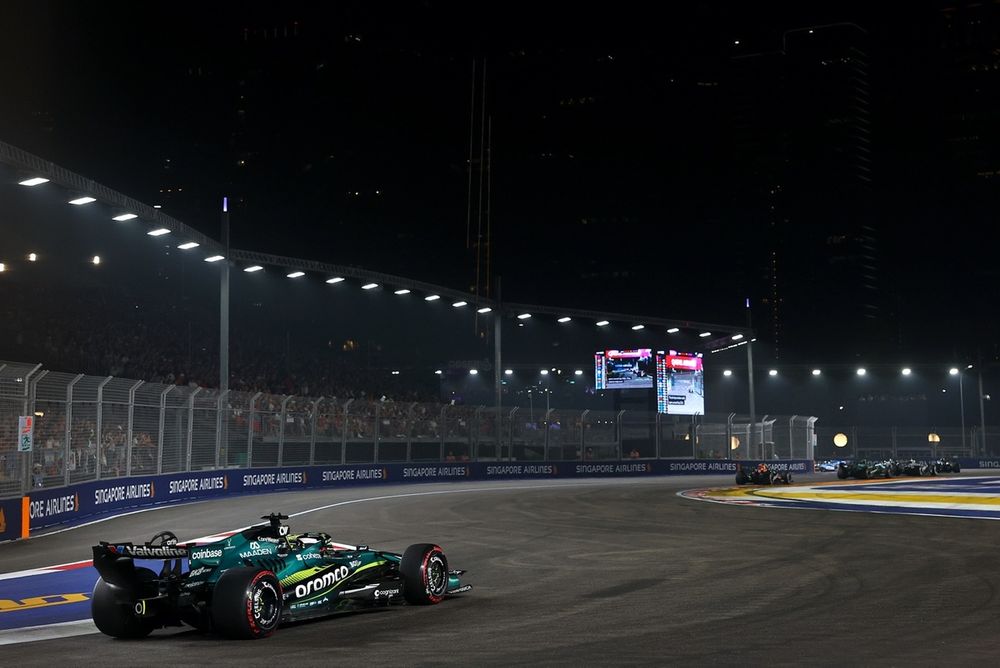
Lance Stroll, Aston Martin Racing
Photograph by: Andy Hone/ LAT Photographs through Getty Photographs
“Sure, we now have realized some issues from Singapore, so we’re making ready countermeasures for the long run,” mentioned Orihara. “We perceive that we have to enhance our management of the turbo lag. For the time being, our management just isn’t assembly the driving force calls for, so we apply some countermeasures. However once more, we have to verify how these work on our energy unit.”
The psychological lesson Aston Martin realized in Singapore
As for Singapore, Aston Martin’s chief trackside officer Mike Krack mentioned the frustration was compounded by expectations being too excessive heading into the race weekend. That, too, is one thing Aston Martin has realized from and can search to keep away from repeating in Austin.
“I at all times name them the emotional dynamics,” Krack mentioned when requested in regards to the disappointment by Autosport. “I believe Sepang in all probability shocked us when it comes to final result and it raised the expectation degree [for Singapore] perhaps even past what was practical.
“And when you don’t ship it for varied causes, then all people turns into upset and it will get harder over the weekend. That may be very clear.”
Nonetheless, such components are tough to foretell, notably as a result of driveability can’t be totally captured by simulation instruments, as Krack additionally acknowledged.
“It’s one thing that in simulations you can not actually have this clear image,” he mentioned. “How a lot will this value you, for instance? If in case you have lag or what Orihara was mentioning in regards to the MGU-Okay stopping, and the way it impacts the drivability. This goes past easy sensitivity simulations.”

Mike Krack, Aston Martin Chief Trackside Officer
Photograph by: James Sutton / LAT Photographs through Getty Photographs
Apart from understanding the precise trigger and the measures Honda has taken, Krack pressured that the workforce has additionally realized a psychological lesson from the setback in Singapore.
“I believe you will need to regroup after such an occasion and attempt to perceive why it occurred, through which areas did we lose out after which take the proper studying from it,” he mentioned.
“And [it’s also important] to handle our expectations a little bit bit higher, or no less than while you handle expectations, that you’ve got a set of dangers that would have an effect on it, which we did not do in Singapore.”
We wish to hear from you!
Tell us what you want to see from us sooner or later.
– The Autosport.com Group