
From being the 2026 Components 1 pre-season title favorite to combating to carry on to second place as Mercedes team-mate Kimi Antonelli accelerates into the space, George Russell has endured a difficult few months. Throughout that interval he has been pressured to query his total strategy to driving, owing to the peculiar necessities of the most recent technical method.
Many of the drivers on the grid have voiced reservations – or noisy complaints – in regards to the unnatural driving model required to get the perfect out of the 2026 vehicles, however Russell belongs to a subset whose model seems to place them at an obstacle in contrast with their team-mates. Most notably at Silverstone and Spa, Russell hit decrease peak prime speeds than Antonelli on key straights, defined by him utilizing fractionally extra electrical energy to re-accelerate after scrubbing off extra velocity by previous corners.
McLaren’s Oscar Piastri is in an analogous place.
Though F1’s energy items are shifting from a 55:45 ratio of inside combustion engine output and electrical energy to 58:42 for 2027, this won’t deliver a few large shift in efficiency traits. However there are different adjustments afoot, together with a brand new household of Pirelli tyre compounds which have been developed by this yr by way of testing with the present vehicles.
Requested in Baku forward of this weekend’s Azerbaijan Grand Prix whether or not this might promote a extra pure model of driving, Russell recommended that it might.
“I believe it has been clear this season that the tyres, entrance to rear, most likely haven’t been nicely balanced sufficient,” he stated. “You have a look at some tracks which are clearly front-limited and the fronts have stayed fairly sturdy all through. It is also due to the additional energy we have coming off the corners, so the rear tyres are getting a more durable time.
“It’s fairly attention-grabbing. I spoke with Antonio Giovinazzi, who drove this new era of automotive for the primary time a few days in the past in Imola, and he stated how impressed he was on the energy of those new vehicles off the nook. And I believe that has fairly an impression on the rear tyres.
“Clearly, final yr after we developed these tyres, they have been with the earlier era of energy unit, which had a lot much less energy off the corners. So, I do not suppose it is a huge shock the rear tyres are getting a more durable time than all of us anticipated.”
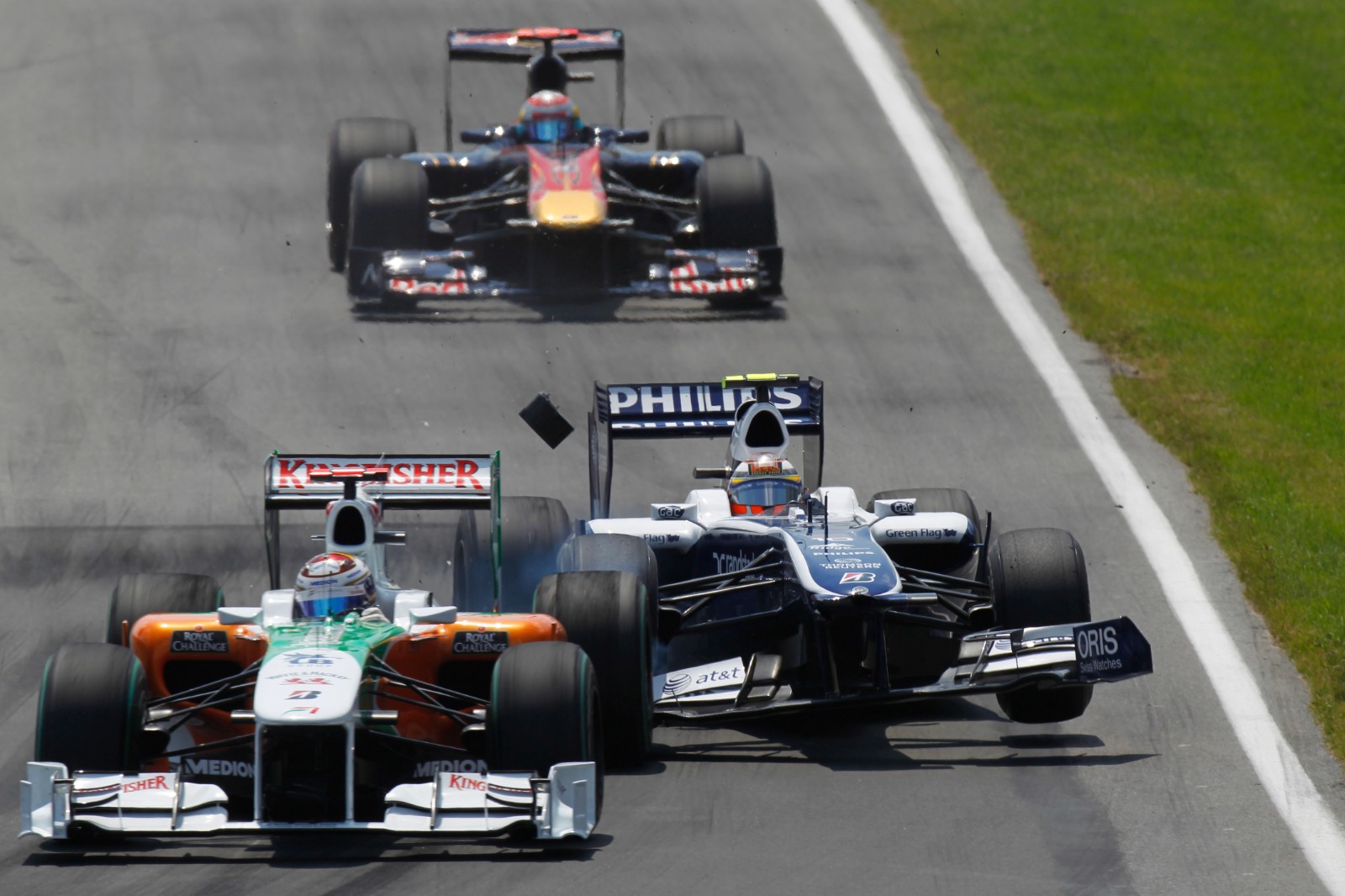
Motion-packed 2010 Canadian Grand Prix was the catalyst for the transient handed to Pirelli when it grew to become F1’s sole tyre provider
Picture by: Getty Photographs
When Pirelli grew to become F1’s unique tyre provider in 2011 it was handed a quick to provide compounds which provided sturdy grip as much as a sure level of their use cycle earlier than falling off rapidly. The set off for this was the 2010 Canadian Grand Prix. Complaints about processional racing had been constructing for years till this level, the place a mix of a freshly resurfaced observe and combined climate within the build-up to the occasion prompted the often strong Bridgestone tyres to degrade quickly, and an unpredictable race ensued.
However Pirelli has typically struggled to search out a really perfect compromise to fulfil what’s a really difficult goal. The tyres have typically proved too delicate to degradation, and when Pirelli has toughened them up in response to criticism, it has overshot – not helped by being restricted by way of how a lot testing it could full with related equipment. At any time when testing is carried out with present vehicles, aggressive paranoia arises as groups suspect one another of covertly evaluating efficiency upgrades.
Whereas the give attention to growing the 2027 tyres has been on making certain better lap time variations between compounds, it’s understood that tweaking the stability between the entrance and rear axle has additionally been on the agenda. However would higher stability alone assist these drivers who’ve been dropping momentum by rear sliding, then paying the worth on the straights?
That could be a sophisticated query to reply, since these adjustments – even when profitable – will not occur in isolation. The FIA can be bringing in a package deal of aerodynamic adjustments to curtail the downforce positive factors groups have been discovering by developments, in addition to mitigating the straight-line demand on electrical energy. What the groups have found in simulation is that these tweaks have better results than first anticipated – a lot so, the truth is, that those that had been planning to hold over their 2026 chassis to subsequent yr for cost-control causes have modified tack.

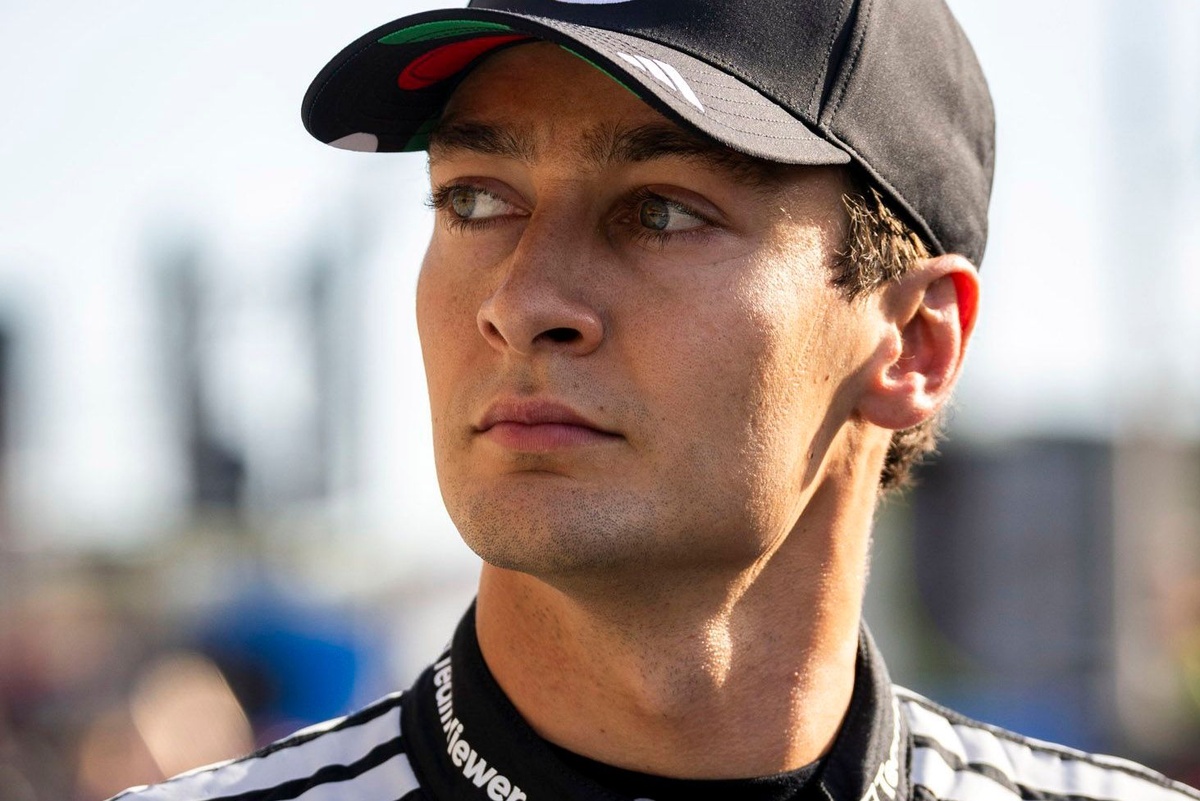
George Russell, Mercedes
Picture by: Sam Bloxham / LAT Photographs by way of Getty Photographs
Moreover tidying up a few of the loopholes across the rear wing, and making it shallower, the adjustments mandate fewer vortex turbines on the ground forefront, in addition to a considerably shorter (from 900mm to 600mm) ‘tea tray’, the part of the ground that extends beneath the motive force’s legs. This latter change opens up the opportunity of groups adopting very totally different rake angles, therefore the re-think on carrying over chassis designs.
For these causes, Antonelli takes a barely totally different view from his team-mate.
“I believe the tyre, additionally this yr the tyre modified fully,” he stated when Autosport requested for his opinion on the magnitude of the impact the brand new tyres could have.
“So I believe on my aspect, you attempt to perceive the tyre one of the simplest ways you may, and also you attempt to adapt. I believe the tyres will not be a lot totally different, most likely the entrance tyre will change a little bit bit, and by way of construction a little bit bit, we’ll see what Pirelli decides.
“We have finished some Pirelli checks and we have given the suggestions, however after all we’ll see what’s going to be determined. However from what we heard, it should not be a lot totally different to what it was this yr.
“The automotive can be totally different – on the aero aspect the automotive is altering, particularly across the bib space, there’s going to be an enormous change, which goes to implement aero loss. Then the group for positive will discover a solution to recuperate that, however the automotive goes to be a little bit bit totally different subsequent yr for positive.
“The baseline would be the identical I believe, however possibly along with the tyre and the automotive evolving, it’ll really feel a little bit bit totally different. It is all about adapting on the finish of the day, so we’ll see.”
There’s an comprehensible quantity of equivocation right here since Antonelli did not need to publicly contradict his team-mate. However of the Mercedes drivers he’s the one who has been adapting finest to the necessities of the brand new laws, which he’s subtly stating.
And naturally, the danger George runs if he pins his hopes on change is that Kimi will accomplish that once more.
We need to hear from you!
Tell us what you wish to see from us sooner or later.
– The Autosport.com Crew