
Though the framework introduced final week establishes the important thing parts of Method 1’s subsequent energy unit laws – a 2.1-litre turbocharged V8 with a considerably lowered electrical part – many particulars nonetheless should be labored out over the approaching months.
One of many key remaining questions is methods to facilitate overtaking. For 2026, the FIA launched overtake mode, however that’s primarily a consequence of how extremely advanced this ruleset is.
For the present energy unit laws to work, the automobiles wanted to have significantly much less drag, which is why energetic aerodynamics have been launched with straight mode zones. With each driver in a position to open their entrance and rear wings, DRS disappeared as an overtaking assist and the FIA needed to provide you with another, which turned out to be overtake mode.
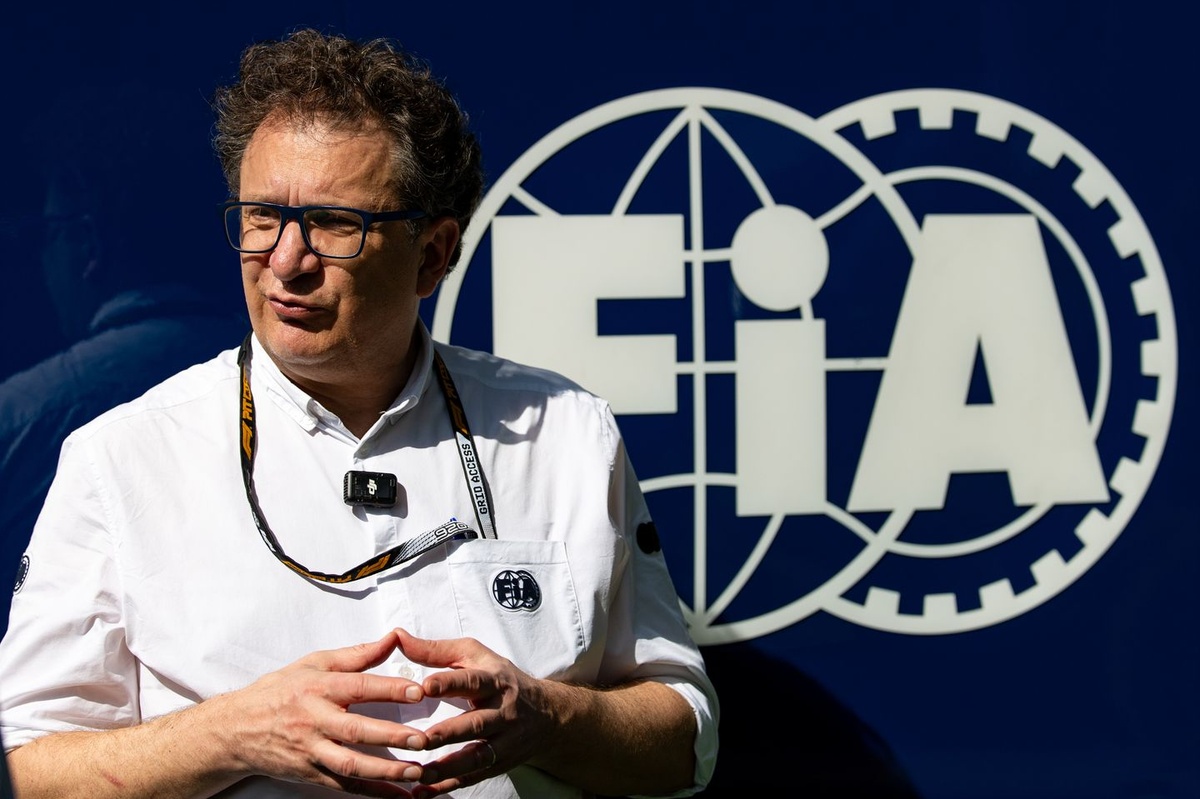
The intention is to maintain the entire idea significantly easier for the following guidelines cycle. FIA single-seater director Nikolas Tombazis confirmed in an unique interview with Autosport that straight mode (SM) zones will disappear and that the governing physique is trying into extra acquainted ideas.

Nico Hulkenberg, Audi F1 Crew
Picture by: Dom Gibbons / Method 1 by way of Getty Photographs
Behind the scenes, work is at the moment underway to ascertain what might be wanted when it comes to overtaking aids from 2030 onwards. The FIA is investigating a number of choices, together with a mixture of push-to-pass and DRS.
“{The electrical} energy in race situations will certainly be extra targeted on push-to-pass and fewer on the vitality restoration. As a result of {the electrical} half might be a lot smaller in dimensions in comparison with the present engines, it signifies that all of the laws that relate to the vitality utilization might be both eradicated or vastly simplified,” Tombazis instructed Autosport.
“So yeah, it is going to be a basic level for overtaking, however we’re nonetheless doing simulations about overtaking and shut racing.”
These simulations are supposed to ascertain precisely what is required when it comes to push-to-pass – a hard and fast variety of seconds per race, as IndyCar has, or a distinct system – and in addition whether or not it must be mixed with the return of DRS.
“If we have to have an addition of DRS to go along with some electrical half, then we might be very happy to do this,” Tombazis stated.
“And simply to say: we cannot have to have SM mode zones anymore beneath the following laws, and due to this fact we’d retain the choice to have a extra DRS-like machine to enrich {the electrical} half to guarantee that we now have the best degree of shut racing.”

Mechanics work on the DRS of Max Verstappen, Pink Bull RB18
Picture by: Giorgio Piola
Whereas simulations are ongoing, it has not but been confirmed that push-to-pass and DRS will certainly be mixed, though Tombazis did verify that such a mixture is now on the desk.
“It may very well be, sure. I did not say that it is going to be precisely like that, however yeah, there may very well be each [DRS and push-to-pass].”
Beneath the preliminary proposal, {the electrical} part would ship as much as 200kW, with 100kW obtainable for regular use and the opposite 100kW for push-to-pass.
By probably including DRS to that, the FIA needs to strike the best steadiness: overtaking strikes ought to ideally as soon as once more be accomplished within the braking zone relatively than midway down a straight.
“Sure, and what I am saying is that DRS is a identified resolution for that. It is not like one thing we would have to invent. We simply have to see, A, if we’d like it, and B, how a lot of it we would want.
“We clearly do not wish to create a state of affairs the place automobiles simply fly previous one another with none combat, we would like there to be racing. We wish automobiles to be coming into corners subsequent to one another and preventing, however we now have the instruments to mainly tune it in the best manner for 2030.”
We wish to hear from you!
Tell us what you want to see from us sooner or later.
– The Autosport.com Crew