

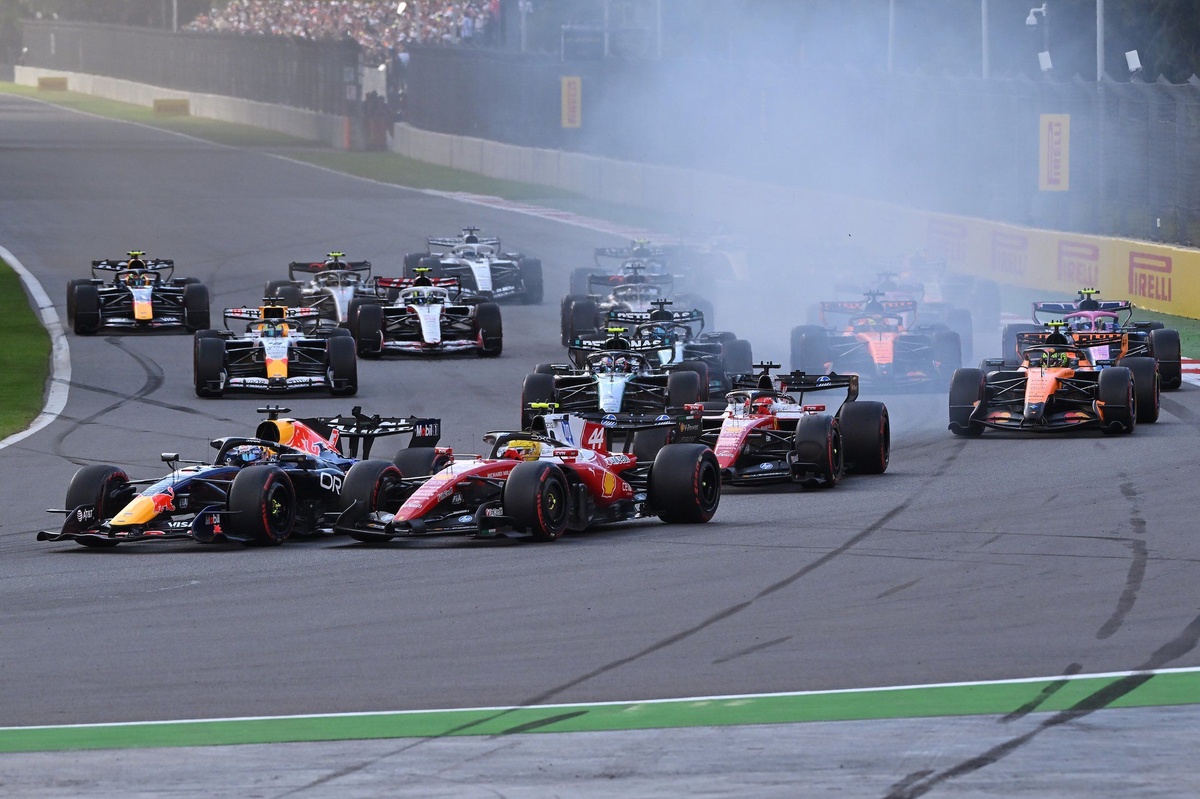
System 1 has moved nearer to a return to V8 engines from the 2030 season because the FIA introduced {that a} unanimous settlement has been reached between the governing physique, F1 administration and the ability unit producers.
F1 has lengthy labored in the direction of cheaper and easier engines for the following regulation cycle, which begins in 2031, having recognised the present components is just too advanced and bodily heavy, and a relic of a distinct course within the highway automotive business.
The FIA might have set the sequence’ future power-unit laws for 2031, when the present cycle ends, however there was broad alignment inside the sport to convey that timeline ahead by one 12 months, pushed by each president Mohammed Ben Sulayem and F1 CEO Stefano Domenicali.
So following latest gatherings by the F1 Fee and energy unit advisory committee, the place key features just like the components, timelines and prices had been mentioned, there had been broad help to convey ahead the following era of engine laws by one 12 months and curtail the present components. The consensus is for F1 to maneuver to a 2.1-litre turbocharged V8 engine with a smaller electrical part of 200kW, half of which shall be ringfenced for overtake-mode use.
The two.1-litre capability is derived from the present 1.6-litre V6 components as a place to begin, with two extra cylinders supposed to scale back growth prices.
After an aborted announcement on Tuesday, the FIA has now formally confirmed there may be unanimous help amongst its stakeholders about bringing that transfer ahead to 2030.
“The FIA introduced F1 Energy Unit laws for introduction from 2030 with a 2.1 litre turbocharged V8 as the ability unit of alternative carrying over some geometrical specifics,” the governing physique stated on Friday.
“The overriding goal is to ship an influence unit which is quite a bit much less advanced, lighter and cheaper than the present energy models. It’s going to function restricted hybridisation, related and sustainable expertise with the purpose of enhancing attack-oriented racing and a sound which resonates with followers.
“Moreover, the plan is to marry the V8 energy unit to a chassis which can even be lighter, extra agile and putting larger emphasis on driver talent and shut racing. ”
F1 and FIA
Photograph by: Benjamin Vinel
Ben Sulayem added: “This settlement marks a major milestone in shaping the way forward for System 1.
“From the outset I’ve been clear in my ambition to ship a sport that’s extra aggressive and extra thrilling for our followers, whereas remaining on the forefront of innovation and sustainability.
“The return of V8 engines represents a possibility to reconnect with the DNA of this championship, bringing again the sound, emotion and pure racing that’s cherished worldwide.
“Our imaginative and prescient is evident, lighter, easier and extra reasonably priced automobiles that put driver talent on the coronary heart of the competitors.”
The 2030 energy unit guidelines nonetheless must be formally voted via by the World Motor Sport Council and by the ability unit producers, with a variety of finer particulars, together with the precise stage of the power-unit price cap, nonetheless to be agreed.
We need to hear from you!
Tell us what you want to see from us sooner or later.
– The Autosport.com Group