

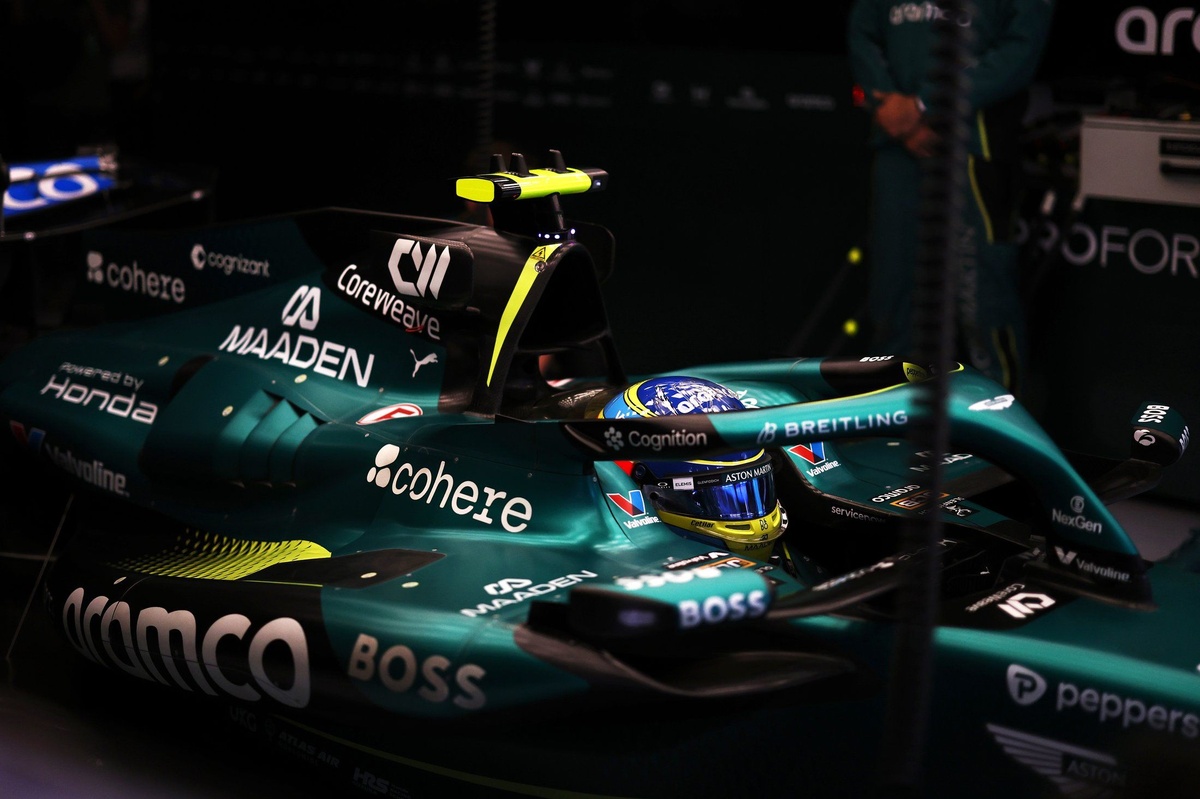
Heading into Components 1’s main technical overhaul, expectations at Aston Martin have been excessive. With a state-of-the-art manufacturing facility in Silverstone, legendary designer Adrian Newey and a works partnership with Honda, all of the components for fulfillment seemed to be in place.
Which will nonetheless show to be the case in the long run, however the begin of the brand new period has proved far tougher than anticipated. Mike Krack just lately admitted that Aston Martin had barely been racing earlier than the summer season break, just because the hole to newcomer Cadillac amounted to round one second.
That modified when the AMR26 obtained its first main improve package deal in Hungary, though the chassis is of course solely a part of the story. Honda has additionally encountered quite a few issues since formally returning to F1, starting from vibrations that troubled the drivers through the opening weeks of the season to a big deficit in outright efficiency.
Talking in an unique interview with Autosport, trackside supervisor and chief engineer Shintaro Orihara defined that the total extent of these issues solely turned clear in January.
“So, in all probability on the finish of final yr, our place was not so dangerous,” he stated. “Nonetheless, efficiency and drivability have been within the growth stage, nevertheless it appeared okay.
“However in January, we realised that in among the areas we discovered some, not points, however we realised that efficiency was at all times up, down, up, down. So we discovered some efficiency, however then we additionally discovered some reliability points.”

Shintaro Orihara, Honda
Photograph by: EYE4images / NurPhoto through Getty Pictures
As a result of reliability is at all times a prime precedence, Honda needed to take a step again on a number of efficiency features to make sure reliability at that efficiency stage. Naturally, that slowed down its general growth.
“In January, we realised that our efficiency and reliability wouldn’t be aggressive,” Orihara added. “After we began operating in Barcelona, we realised that our efficiency was positively poor in comparison with the opposite producers. And likewise, we discovered some points on the battery facet.”
These battery-related points made the event course of extra advanced. They value precious observe time throughout winter testing, one thing that was particularly painful given Aston Martin and Honda’s want to assemble knowledge to get better from their deficit.
“So we realised that we weren’t in good place, possibly at starting of this yr. Final yr, at finish of final yr, we already noticed that we weren’t aggressive, however we did not count on it so dangerous,” Orihara admitted.
What has been Honda’s greatest problem?
A part of the reason is that Honda’s present F1 mission could be very totally different from its profitable years with Crimson Bull, one thing that ties in with the corporate’s philosophy of transferring F1 information to different components of the corporate.
One other a part of the reason is, in accordance with Honda, the complexity of the present rules. Orihara pressured that there has not been one single stumbling block forward of 2026, however fairly the mixture of all of the modifications launched on the identical time.
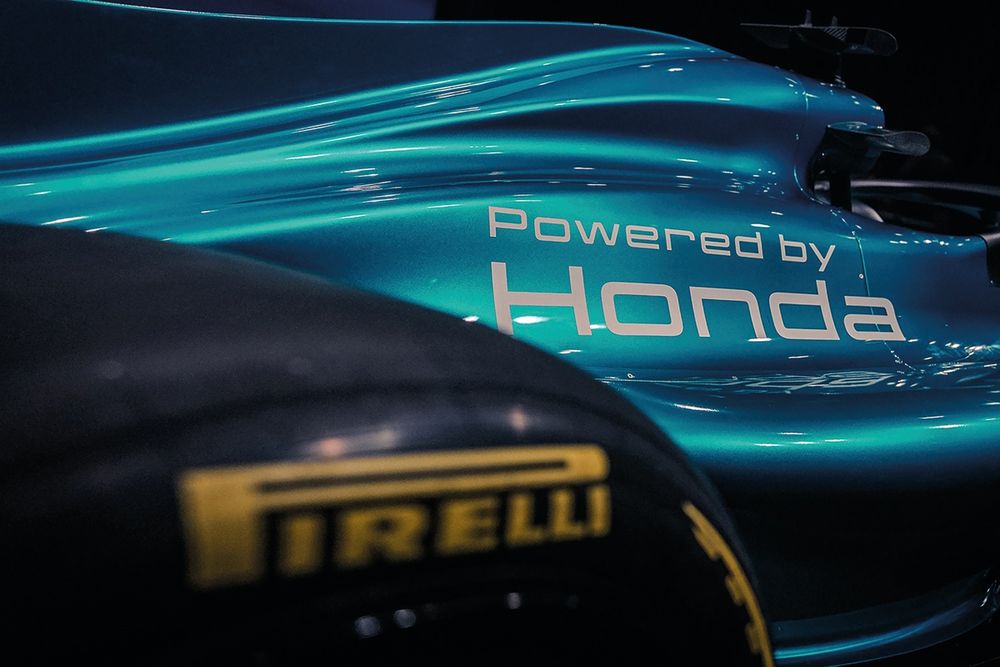
Honda Energy Unit Launch
“It is troublesome to say which part of the ability unit is most difficult as a result of on this regulation, all the things has modified quite a bit,” stated Orihara. “For instance, MGU-Okay energy modified from, to illustrate, [120] to 350 kilowatts. That could be a important change.
“But additionally on the interior combustion engine facet, we have now modified the gas circulation charge. So on this regulation, all the things has been modified a lot. So, a difficult level for Honda is simply the mixture of a whole lot of modifications occurring on the identical time.”
Meaning Honda is missing outright energy from its inner combustion engine, one thing the long-awaited Zandvoort improve is particularly designed to deal with. It’s meant to be step one in the direction of decreasing the model’s nonetheless important efficiency deficit.
On {the electrical} facet of the ability unit, the emphasis is on effectivity. Nonetheless, Orihara defined that the modifications there have additionally had a serious impression on drivability – one of many areas that has been a recurring subject for Honda and Aston Martin within the opening months of the season.
“Eradicating the MGU-H has additionally been fairly difficult on the ability unit facet,” he stated.
“Most likely that’s the most fun level for energy unit producers. I’ve at all times been mentioning drivability. That’s, possibly not primarily, however the majority of that’s coming from eradicating the MGU-H.
“So that may be a difficult level for us as an influence unit provider, to maintain the enhance stress at a goal. Once more, it is troublesome to select one part that has been most difficult for us, nevertheless it has been the mixture of all modifications on the identical time.”
Though Honda is aware of that returning to the aggressive stage it’s focusing on will take time – a whole lot of time – it hopes to make a primary step at Zandvoort. That improve is concentrated purely on bettering the interior combustion engine and was already examined throughout a filming day on the Hungaroring.
We wish to hear from you!
Tell us what you want to see from us sooner or later.
– The Autosport.com Group